What does it mean when I get a code violation notice for my fence?
A code violation notice for your fence means a code officer inspected the property and found a condition involving the fence, wall or pool barrier that does not meet the local code — and the notice gives you a date by which it is supposed to be corrected. It is the opening step of the local code enforcement process, not a court case and not a fine by itself.
Call us or send your notice details · free estimate
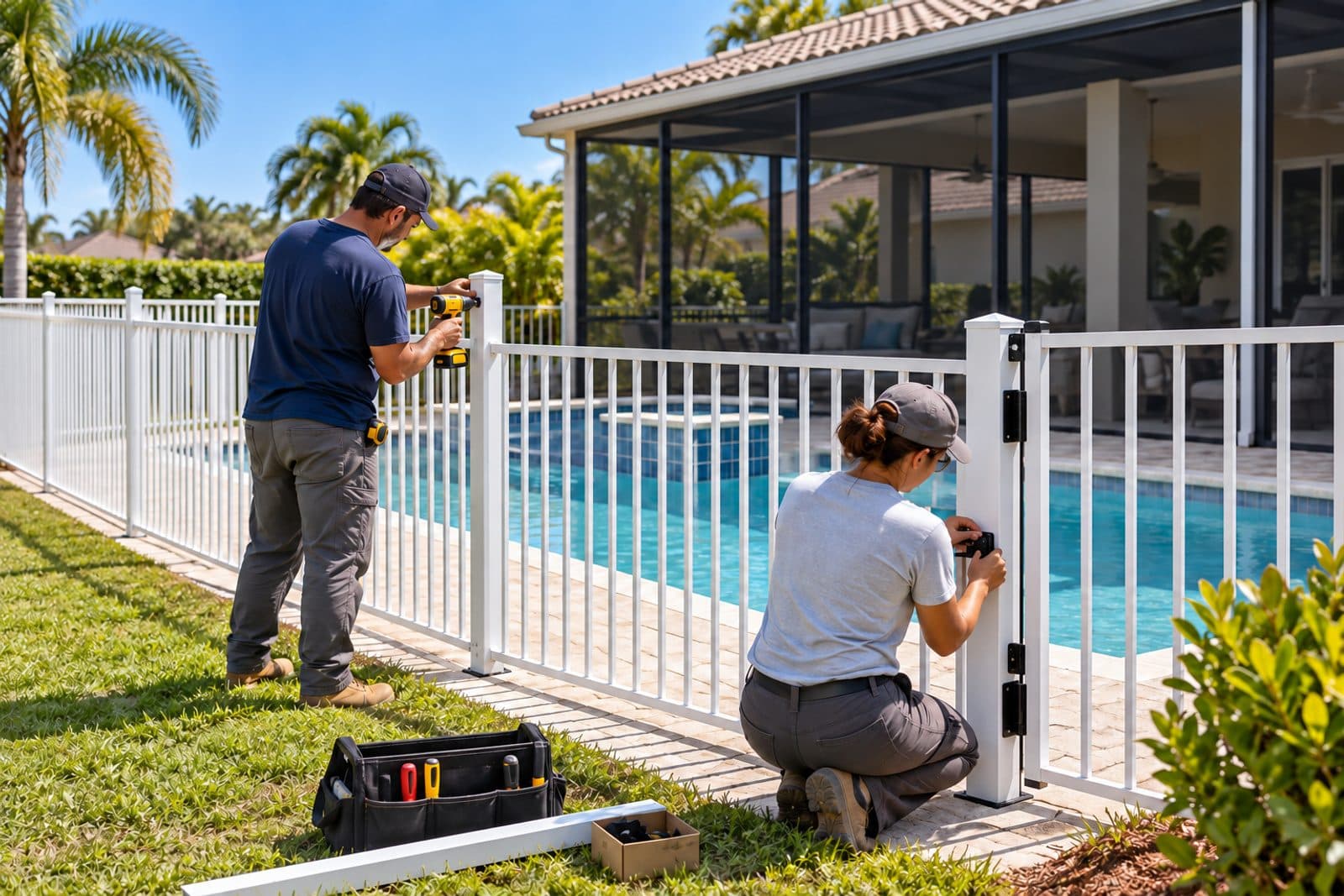
What the notice is actually about matters, because fence citations cover very different problems: a leaning, broken or storm-damaged fence, a fence built without a permit or above the allowed height or inside a setback, or a pool barrier with gaps or a gate that no longer closes and latches by itself. The cited language on your notice tells you which one applies and what the code office expects to see corrected.
How the process works
In Florida, code enforcement is handled locally under Chapter 162, Florida Statutes, which lets cities and counties use either a code enforcement board or a special magistrate. The process generally begins with a notice of violation that identifies the problem and gives a reasonable time to correct it. If it is not corrected, the case is set for a hearing, and the board or magistrate issues an order with a compliance date; a fine may be imposed for each day a violation continues past that date, and a certified copy of an order imposing a fine can be recorded in the public records, where it becomes a lien on the property.
The repair side is separate from the case side. Under section 105.1 of the Florida Building Code, most construction, alteration and repair work needs a permit from the city or county building department with jurisdiction, and fence work is permitted under the Florida Building Code wind requirements — strictest in the High-Velocity Hurricane Zone of Broward and Miami-Dade. A fence or wall already built without a permit generally has to be permitted after the fact, or rebuilt to the approved height and position; the building department decides which.
If the notice involves the barrier around a pool, Chapter 515, Florida Statutes, and the Florida Building Code require a barrier with gates and doors designed to keep young children from reaching the water. Keep children away from the pool and keep it closed off until the barrier and latch are working, and do not attempt structural repairs yourself.
What you can check yourself
- The cited condition and the correction dateRead the notice for the exact condition described and the date by which it is to be corrected. Note any hearing date listed and the phone number for the code office that issued it.
- Whether a permit is involvedIf the notice mentions work done without a permit, or the fence height or location, ask your local building department what is on the property record. An open or expired permit stays on the record until it is properly closed out.
- Gates and latchesOn a pool barrier, check that the gate swings shut on its own and latches without being pushed, and look for gaps at the ground or between sections.
- Property lines and setbacksIf placement is cited, a survey shows where the line actually falls. Height and setback limits vary by city and county, so confirm them with the building department.
- PhotosTake dated photos of the fence or barrier before anything is touched. They are useful when you show the code office what was corrected.
When to call us
Call us when the fence, wall or barrier has to be repaired or rebuilt, when the work needs a permit, or when the notice points to work that was done without one and an after-the-fact permit may be required. Have the notice, any order you have received, and photos handy. We read the notice with you, look at the property, tell you what work the violation calls for and agree the price in writing before work starts — the estimate is free. Call (954) 906-7864 or send a request through the form on this site.
We are a contractor, not a law firm: we do not represent owners at hearings and we do not negotiate fines or liens. Questions about your own case — deadlines, hearing dates, fines, liens and appeals — go to the code enforcement office named on your notice, and legal questions go to a Florida attorney.
What we will do
- Read the citationWe go through the cited language so the work matches what the code office described, whether that is storm damage, height and setback, or a barrier gap.
- Check the line and setbacksWhere placement is in question, the survey is checked for the property line and setbacks before anything is built.
- Permit and repairWe pull the permit under our Florida Certified Building Contractor licence CBC1267336 when the work needs one, after-the-fact permits included, and repair or rebuild the fence or wall to code.
- Pool barrier workWe bring the barrier, gates and self-closing, self-latching hardware into line with Chapter 515 and the Florida Building Code.
- Inspections and paperworkWe use components approved for the wind conditions where they are installed, schedule the inspections through to final, work to get the permit closed out and give you the paperwork for the code office.
Work by 360 Home Improvements, Florida Certified Building Contractor CBC1267336. Electrical, plumbing and AC work goes to our Florida-licensed subcontractors, who pull that trade's permit.
Related questions
- Does a fence need a permit in Florida?
- Section 105.1 of the Florida Building Code requires a permit for most construction and repair work, and fence work is permitted under the code's wind requirements. The details, including height and setback limits, vary by city and county, so confirm with your local building department.
- My fence blew down in a storm. Is that still a violation?
- Storm damage left unrepaired is a common source of code enforcement notices after hurricane season, which runs June 1 through November 30. The compliance deadline on a notice still applies as written, so contact the code office named on it with any question about timing.
- What happens if the fence was built without a permit?
- Work already done without a permit generally has to be permitted after the fact, which can involve drawings and inspections, or the fence may have to be rebuilt to the approved height and position. The building department decides which path applies.
- What does this kind of repair cost?
- Cost depends on the scope of the violation, whether a permit or an after-the-fact permit and drawings are needed, materials and wind-rated components, and whether any licensed trade work is involved. We give a free estimate after looking at the notice and the property, and work starts only once you agree the price.
- Will fixing the fence close my case?
- Whether a case is closed, and what happens with any fine or lien, is decided by the code enforcement board, special magistrate or local government named on your notice. We do the repair work and provide the permit and inspection paperwork for you to show that office.
This page is general information about Florida code enforcement, not legal advice. For questions about your own case (deadlines, hearing dates, fines or liens), contact the code enforcement office named on your notice, or a Florida attorney.
Send us the notice
Free estimate. The price is agreed before the work starts.
Keep reading
Or send us your notice details
Tell us what the notice says and where the property is, and we'll get back to you about the work it needs.
Code Violation Solver is run by 360 Home Improvements, a licensed Florida contractor. We fix the condition behind the violation; the code office named on your notice decides the case.