Overgrown lot, yard or debris citation
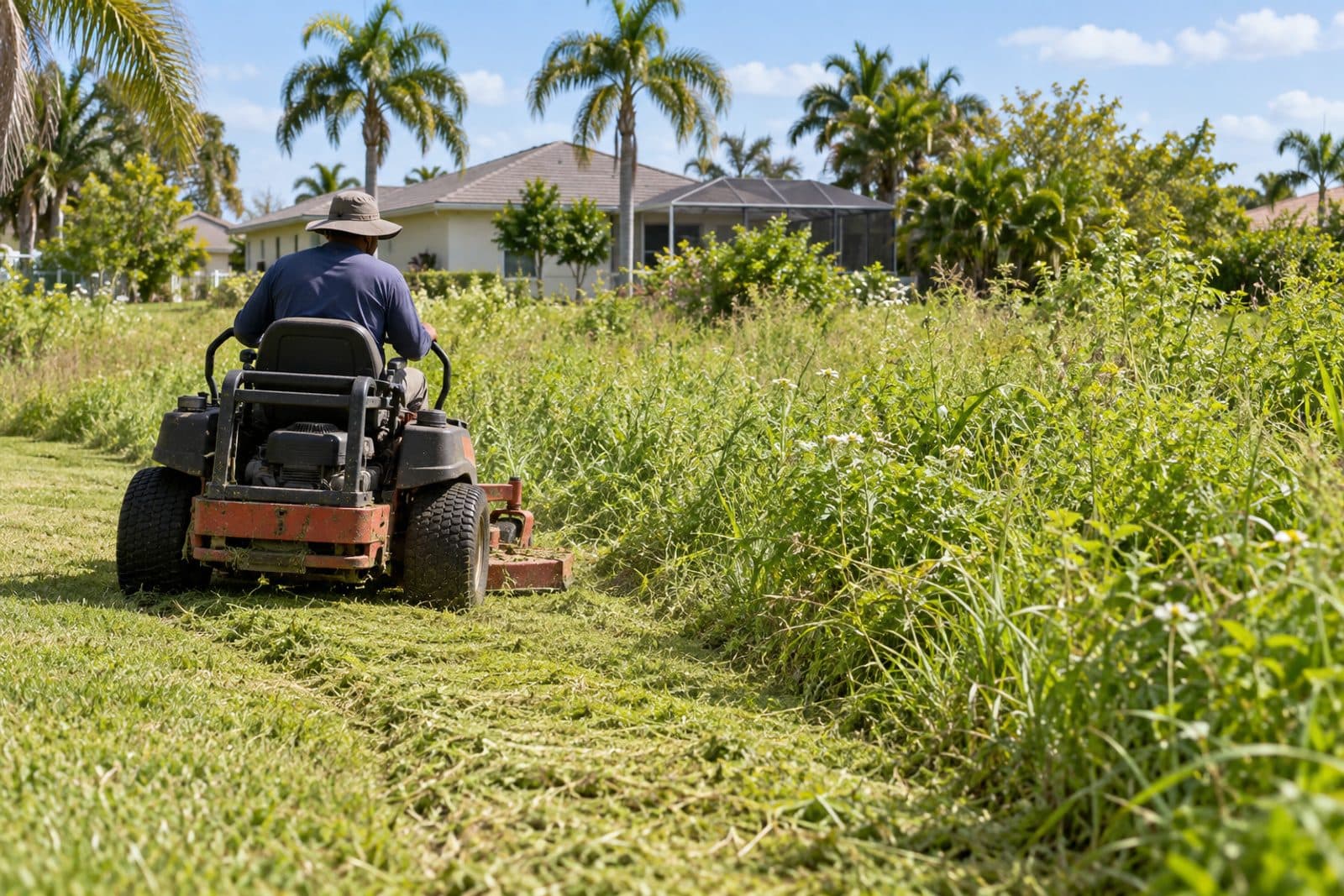
Overgrowth and debris citations are usually the most straightforward to correct: the lot is cut and cleared, the debris hauled away, and the city asked to re-inspect. In many Florida cities, if the owner does not clear it, the city can do the work itself and bill the cost or record it as a lien, so it is worth handling before the compliance date.
General information, not legal advice. Your notice and your city's code office have the final word.
Free estimate · 360 Home Improvements, Certified Building Contractor CBC1267336
Before anything else, please don't
- Don't let the compliance date pass. In many Florida cities, the city can clear the lot itself and bill or lien the cost.
- Don't cut down a tree before checking whether your city requires a tree removal permit.
- Don't throw the notice away. It lists what the inspector saw, and the re-inspection checks against it.
Why this gets cited
- Grass and weeds above the height the city's code allows.
- Dead trees, fallen limbs or palm fronds left on the lot after a storm.
- Furniture, appliances, building materials or yard waste stored outside.
- A vacant lot or an empty house that nobody has been keeping up.
- Growth spreading over the sidewalk, the street, an alley or a neighbor's property.
- Standing water in containers, old tires or an untended pool.
How we resolve it
- We walk the lot against the notice, so everything it lists is covered.
- We cut the grass and weeds, clear brush and vines, and leave the lot below the height the city sets.
- We haul away debris, junk and yard waste for proper disposal.
- Dead trees or hanging limbs come down where needed, after checking whether your city requires a tree removal permit.
- We photograph the finished lot, and the code office is asked to re-inspect and close the case.
Who does the work
360 Home Improvements does the cutting, clearing and hauling. Anything else the notice cites, such as a fence, a shed or a damaged structure, is handled under our Certified Building Contractor license (CBC1267336).
Certified Building Contractor CBC1267336. Look it up on the Florida DBPR license search.
The Florida angle
Florida's growing season runs most of the year, so a lot cut in spring can be over the limit again by summer, and storm season adds fallen limbs and fronds. Many cities have a lot-clearing program: after notice, the city can clear the property itself and bill the owner or lien the cost. The rules, the height limits and the notice periods vary by city, so check your notice.
Free tools for this
- Property upkeep checklistWhat would a code officer notice at my property?Walk your property with a checklist of what Florida code officers commonly look at — grass and weeds, debris, standing water and pools, vehicles, boats, trash carts, roof tarps, screens, paint, fences and the swale — mark each item OK or needs attention, and get what to correct, the matching violation page and a printable copy.Open →
- Notice decoderWhat does my notice mean?Tick the words you can see on your letter — notice of violation, compliance date, hearing, order imposing fine, lien — and get each one in plain English, where you likely are on the usual Florida timeline, and a next-steps checklist.Open →
- Deadline checkerHow many days do I have?Enter the date on your notice and the days to correct, or the compliance date, and get the days left, a dated plan to get it corrected in time, a printable copy and a calendar file.Open →
- Proof-of-compliance photo guideWhat photos prove it's fixed?Pick the violation on your notice and get a shot list for before, during and after the work — the wide shot with the house number, the inspector's angles, close-ups, the permit card and the final inspection — plus a printable photo card to hold in the first frame.Open →
- Contractor license guideWhich licensed contractor fixes this?Tick the work your notice calls for — roof, structure, electrical, plumbing, AC, pool, fence or lot clean-up — and see the Florida license that usually does it, the DBPR codes to look for, who pulls each permit, and how to check a license.Open →
Questions people ask
- Can the city clear my lot without me?
- In many Florida cities, yes. After notice, a city can clear an overgrown lot itself and bill the owner or record the cost as a lien. The rules and the notice period vary by city, so check your notice.
- How high can the grass be?
- It depends on the city. The notice usually cites the local code section and the height it sets. We cut below that and leave the lot ready for the inspector.
- Can the lot be kept up afterward?
- Yes. Owners of vacant lots and empty homes often set up regular cutting so the lot stays under the limit through the growing season. Ask about it with your estimate.
- Do I need a permit to remove a tree?
- Many Florida cities and counties require a tree removal permit, especially for larger or protected trees, and dead or dangerous trees often have a simpler process. We check with your city before anything is cut.
General information, not legal advice. Your notice and your city's code office have the final word.
Get a free estimate
Tell us what the notice says and where the property is. We look at the violation, explain the work, the permits and the inspections, and give you the price before anything starts.
Keep the notice handy: the case number, the violation cited and the compliance date tell us what the city needs to see.
Find your city
Find your county's code office — the office named on your notice is the one to ask about deadlines, hearings, fines and liens.
A different kind of violation?
- A lien was recorded on my property
- Daily fines are adding up
- Work done without a permit
- Open or expired permits
- Roof citation
- Fence, wall or pool barrier citation
- Unsafe structure or building in disrepair
Code Violation Solver is run by 360 Home Improvements. We fix the violation and get it permitted and inspected; closing the case, and anything to do with fines or liens, is up to the city.