What does it mean when I get cited for unpermitted work in Florida?
Being cited for unpermitted work means the local code office has determined that construction, alteration or repair was done on the property without the permit the Florida Building Code requires for it. Section 105.1 of the Florida Building Code requires a permit for most construction, alteration and repair work, and permits are issued by the city or county building department with jurisdiction over the property — so the usual path forward is to apply for a permit after the fact, have the work inspected, and either bring it up to code or take out what cannot be kept.
Call us or send your notice details · free estimate
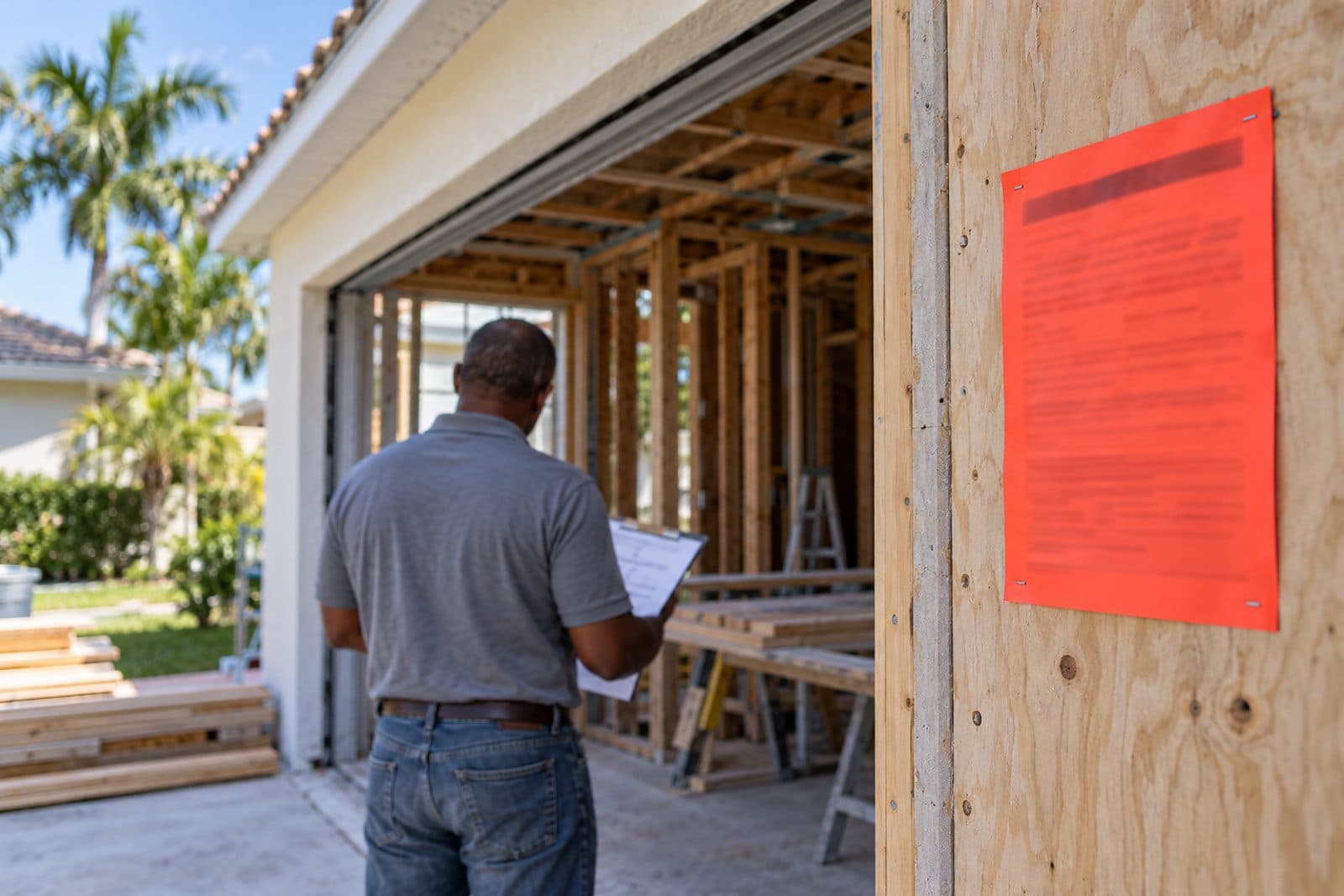
The nuance that surprises most owners: it does not matter who did the work. Work a previous owner or a past tenant did without a permit stays with the property, and the citation goes to whoever owns it now.
How it works
In Florida, code enforcement is handled locally under Chapter 162, Florida Statutes, which lets cities and counties use either a code enforcement board or a special magistrate. The process generally starts with a notice of violation that identifies the problem and gives a reasonable time to correct it. If it is not corrected, the case is set for a hearing, and the board or magistrate issues an order with a compliance date; a fine may be imposed for each day the violation continues past that date, and a certified copy of an order imposing a fine can be recorded in the public records, where it becomes a lien on the property.
Correcting an unpermitted-work violation usually means an after-the-fact permit. The building department may require drawings, and because the work is already finished, an inspector often has to see what is behind the surfaces — framing, wiring, plumbing — which can mean opening walls or ceilings. It is the building department, not the contractor, that decides what must be opened up, corrected or removed.
Common examples are garage conversions, enclosed porches and patios, additions, converted rooms, and replaced windows, doors and roofs — work that is often visible from the street. Electrical, plumbing and air-conditioning portions are performed by contractors licensed in those trades, who pull that trade's own permit. The exact steps, deadlines and amounts are stated on your notice and vary by city and county, so confirm them with the code office named on it.
What you can check yourself
- Read the notice closelyNote what work is described, the compliance date, any hearing date, and the office and case number printed on it. Those details drive everything else.
- Check the permit historyYour local building department can tell you what permits exist for the address and whether any are open or expired. An open or expired permit stays on the property record until it is properly closed out.
- Gather what you haveClosing documents, inspection reports from when you bought, invoices or photos from any past work help establish when the work was done and by whom.
- Photograph the conditionTake clear photos of the area cited, inside and out, before anything is changed. They are useful when a contractor or the building department reviews the scope.
- Ask the code office your case questionsDeadlines, hearing dates, fines, liens and appeals are decided by the office named on your notice. Legal questions go to a Florida attorney.
When to call us
Call when the correction needs a permit pulled, drawings prepared, or structural, electrical, plumbing or AC work touched — that work has to be done by licensed contractors. Have your notice, any order, and photos ready when you reach us. We are 360 Home Improvements, a licensed Florida contractor working under Florida Certified Building Contractor licence CBC1267336, a state certification valid in every Florida county.
The estimate is free: we read the notice with you, look at the property, tell you what work the violation needs, and agree the price in writing before any work starts. We are a contractor, not a law firm — we do not represent owners at hearings and we do not negotiate fines or liens, and questions about your case go to the code enforcement office named on your notice. Call (954) 906-7864 or send a request through the form on this site.
What we will do
- Identify the scope and permit historyWe confirm exactly what work was cited — an enclosed garage or patio, an addition, a converted room, replaced windows or doors — and check what permits exist for the property.
- Apply for the after-the-fact permitWe prepare drawings where the building department needs them and apply under our CBC licence.
- Open up what the inspector must seeWhere finished surfaces have to come open so framing, wiring or plumbing can be inspected, we open them and close them back up afterward.
- Bring the work to code or take it outWe correct the work to the Florida Building Code, or take out what cannot be kept, as the building department directs.
- Trade work and inspectionsElectrical, plumbing and AC portions are done by our Florida-licensed subcontractors under their own trade permits, and we schedule inspections through to final and give you the paperwork for the code office.
Work by 360 Home Improvements, Florida Certified Building Contractor CBC1267336. Electrical, plumbing and AC work goes to our Florida-licensed subcontractors, who pull that trade's permit.
Related questions
- Can an after-the-fact permit be approved for work already finished?
- Building departments do issue permits after the fact, but approval depends on whether the work meets the Florida Building Code and on what the inspector can verify. That decision belongs to the building department with jurisdiction, and requirements vary by city and county.
- What if a previous owner did the unpermitted work?
- Unpermitted work stays with the property, so the current owner receives the notice. Your closing paperwork and any inspection report may help establish when it was done, but the correction is still handled through the local building department.
- Do walls really have to be opened?
- Sometimes. If an inspector cannot see framing, wiring or plumbing any other way, finished surfaces may have to be opened so the work behind them can be inspected. The building department decides what must be exposed.
- What drives the cost of fixing an unpermitted-work violation?
- The size and type of the work cited, whether drawings and an after-the-fact permit are required, how much finished surface has to be opened and restored, materials, and whether licensed electrical, plumbing or AC work is involved. We give a free estimate and agree the price before work starts.
This page is general information about Florida code enforcement, not legal advice. For questions about your own case (deadlines, hearing dates, fines or liens), contact the code enforcement office named on your notice, or a Florida attorney.
Send us the notice
Free estimate. The price is agreed before the work starts.
Or send us your notice details
Tell us what the notice says and where the property is, and we'll get back to you about the work it needs.
Code Violation Solver is run by 360 Home Improvements, a licensed Florida contractor. We fix the condition behind the violation; the code office named on your notice decides the case.