Time-sensitive
Daily fines adding up in Orlando, FL
A daily fine usually means a case has already been heard. In Florida, code enforcement runs locally under Chapter 162, Florida Statutes. The process generally starts with a notice of violation that names the problem and gives a reasonable time to correct it. If it is not corrected, the case is set for a hearing, and a code enforcement board or special magistrate issues an order with a compliance date. A fine may then be imposed for each day the violation continues past that date. First step: read the notice or the order from the first line to the last. Write down the compliance date and any hearing date. Then call the code office named on the notice and ask what the record shows. Telling that office work is under way is a sensible first step.
Call us or send your notice details · free estimate
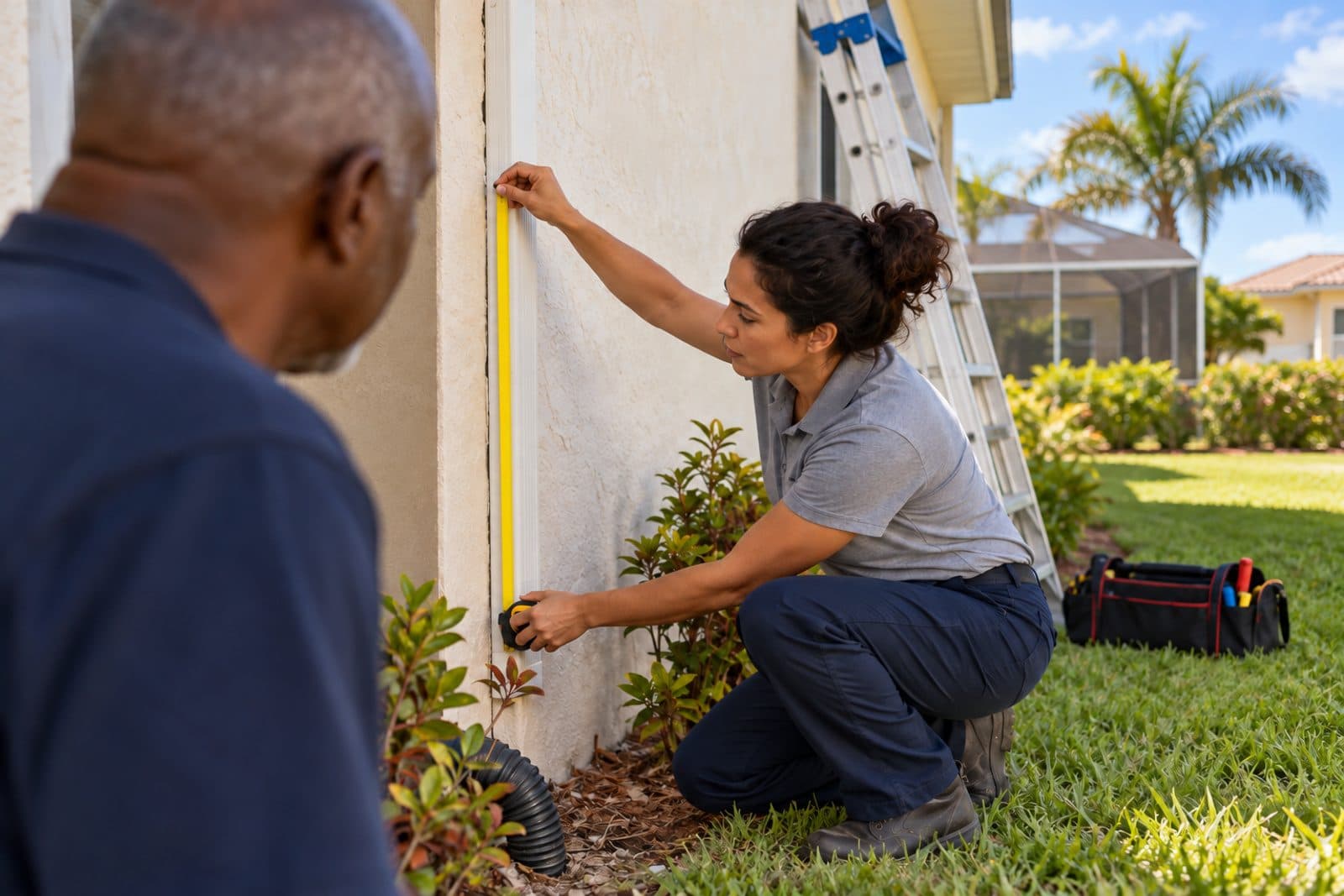
Orlando is an incorporated municipality, so code enforcement is normally run by the municipality itself, though some local governments contract it out. The notice names the office that is handling your case, and that office is the one to ask about deadlines, hearing dates, fines and liens. The exact steps and amounts vary by city and county and are stated on your notice. A certified copy of an order imposing a fine can be recorded in the public records, where it becomes a lien on the property. We are a contractor. We fix the property condition behind the case. What happens to a fine or a lien is decided by the board, magistrate or local government named on your notice.
While your case is open, don't
- Do not let the dates pass unnoticed. The compliance date and any hearing date are printed on the notice or the order, and the day the property is brought into compliance matters.
- Do not start permit work before the permit is issued. Section 105.1 of the Florida Building Code requires a permit for most construction, alteration and repair, and unpermitted work generally has to be permitted after the fact anyway.
- Do not tear out finished work first. An after-the-fact permit can involve drawings, inspections and opening up surfaces, so let the building department say what it needs to see before anything comes apart.
- Do not assume the fine has stopped. Never treat a violation as closed until the code office named on your notice confirms compliance.
- Do not climb a damaged roof or an unsafe structure. Keep people away from the hazard, children above all, and leave structural and roof repairs to a contractor.
What we do
- We read the notice with youWe go through the notice or the order and identify the cited violation in plain words. Then we look at the property so the scope matches what was actually cited.
- Free estimate, price in writingWe tell you what work the violation needs and agree the price in writing before work starts. Cost depends on the scope, the condition of the property, access and whether a permit and inspections are involved.
- Permits where the work needs themWe pull the permit under our Florida Certified Building Contractor licence CBC1267336, including after-the-fact permits. Electrical, plumbing and air-conditioning work is done by our Florida-licensed subcontractors, who pull that trade's permit.
- The work itselfRepair, clean-up or construction, depending on what the notice cites. This is the part that changes the condition of the property.
- Inspections and close-outWe schedule the inspections and work to get the permit closed out. An open or expired permit stays on the property record until it is properly closed out.
- Paperwork for the code officeWe give you the documents so you can show the code office named on your notice that the work is done. That office confirms compliance, not us.
Work by 360 Home Improvements, Florida Certified Building Contractor CBC1267336. Electrical, plumbing and AC work goes to our Florida-licensed subcontractors, who pull that trade's permit.
How it works in Orlando
Orlando sits inland in Central Florida. There is no salt spray here, but constant humidity, strong UV and heavy rain do their own damage. Gate hardware, garage door springs, rollers, tracks and exterior lock cylinders rust and seize. Ducts in unconditioned attics sweat and grow mold. Afternoon thunderstorms run June through September, and this is one of the most lightning-prone regions in the country. Hurricane season runs June 1 through November 30 and brings wind, wind-driven rain and spin-up tornadoes well inland, which is why wind-rated garage doors and secured openings matter in Orlando. Storm damage left unrepaired — a roof still under a tarp, a downed fence, scattered debris — is a common source of notices afterward.
Orlando housing ranges from 1920s–1950s bungalows near downtown, with detached garages and carports, to the large 1970s–2000s subdivisions and the newer tracts on the south and east sides around Lake Nona. Concrete block and stucco walls, asphalt shingle or tile roofs, and slab-on-grade foundations are the norm. In the newer subdivisions, near-identical builder-grade garage doors and openers age out at about the same time. Florida's long wet growing season also lets yards and vacant lots overgrow fast, and overgrown lots, junk and debris are governed by local property-maintenance ordinances rather than one statewide rule. Our state certification is valid in every Florida county, so we work in Orlando and across the state.
Questions people ask
- Will fixing the property stop the daily fine?
- That is for the code office and the board or special magistrate named on your notice. Our part is the work, the permits and the inspections, plus the paperwork you hand in. Never assume a fine has stopped until that office confirms compliance.
- Can you tell me how much I owe or get a lien released?
- No. We are a contractor, not a law firm. Fines, liens, hearings and appeals are decided by the code enforcement board, special magistrate or local government named on the notice, and legal questions go to a Florida attorney.
- The work was done years ago without a permit. Now what?
- Work already done without a permit generally has to be permitted after the fact, which can involve drawings, inspections and opening up finished surfaces so the work can be inspected. We can pull that after-the-fact permit under our licence. Your Orlando building department confirms what it needs for your property.
- Does hurricane season change anything in Orlando?
- Demand rises ahead of and during hurricane season, June through November, and again in the hot, humid summer. Storm damage left unrepaired is a common source of notices here. The compliance deadline on your notice still applies as written.
- Who runs code enforcement in Orlando?
- Orlando is an incorporated municipality, so code enforcement is normally run by the municipality itself, though some local governments contract it out. The notice names the office. Send any question about your case, your dates or your fine to that office.
- Are you licensed to work in Orlando?
- Yes. We hold a Florida Certified Building Contractor licence, CBC1267336, a state certification valid in every Florida county and verifiable on the Florida DBPR website. Trade work is performed by Florida-licensed subcontractors in that trade.
This page is general information about Florida code enforcement, not legal advice. For questions about your own case (deadlines, hearing dates, fines or liens), contact the code enforcement office named on your notice, or a Florida attorney.
Send us the notice
The estimate is free: we read the notice with you, look at the property, tell you what work the violation needs and agree the price in writing before work starts. Call (954) 906-7864 or send a request through the form on this website — and send questions about the case itself, including dates, fines and liens, to the code office named on your notice.
Request a free estimate
Tell us what the notice says and where the property is. We'll look at what the violation needs and agree the price with you before any work starts.
Same violation in nearby cities
Other violations in Orlando
Code Violation Solver is run by 360 Home Improvements, a licensed Florida contractor. We fix the condition behind the violation; the code office named on your notice decides the case.