Keep people clear of the damaged area
Unsafe structure or building in disrepair in Jacksonville, FL
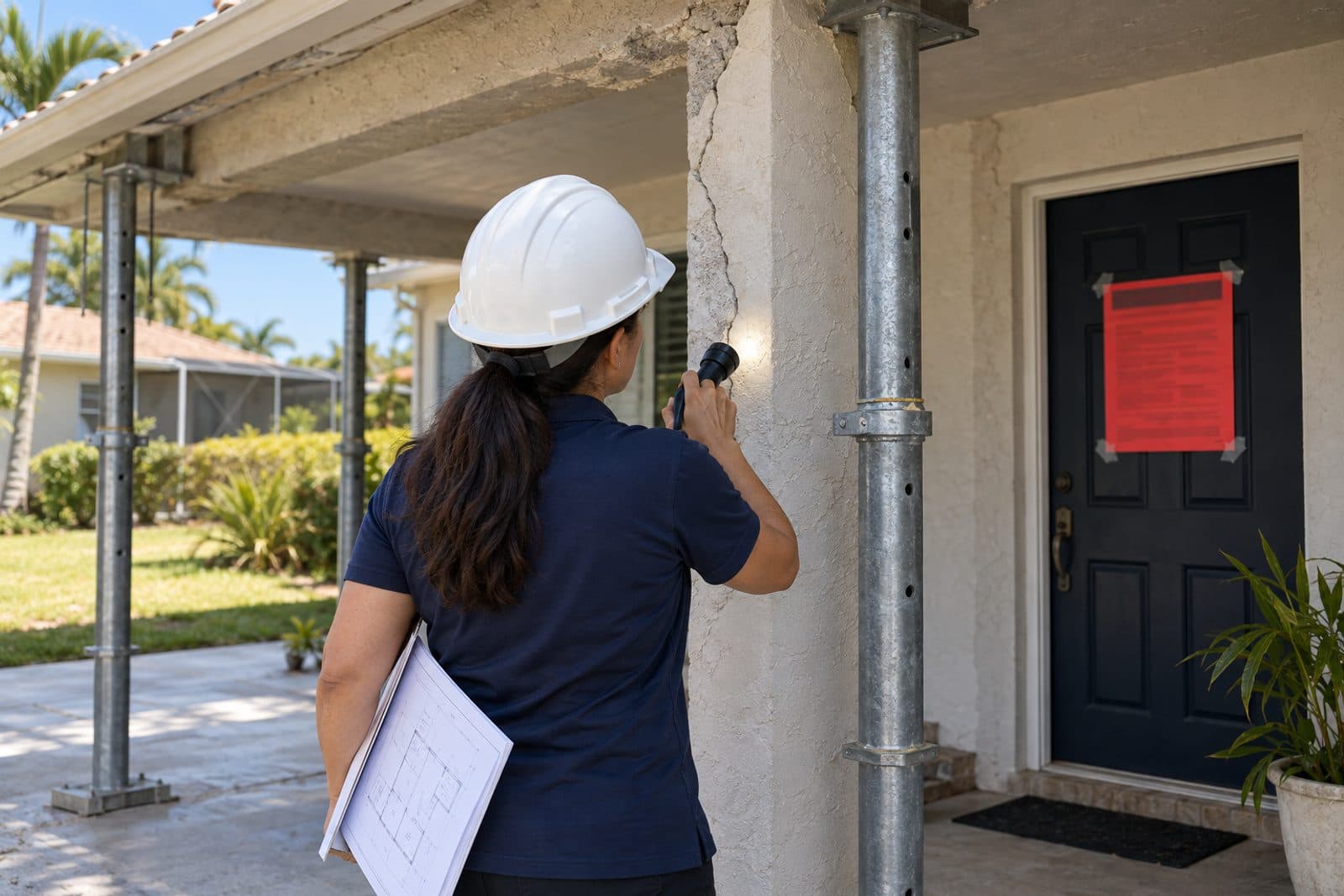
An unsafe-structure notice means a building official looked at the property and found a condition that makes the building, or part of it, unsafe to use. It can be structural damage, rotted framing, spalling concrete, broken stairs, railings or balconies, fire or storm damage, or a building left open and unsecured. Read the notice all the way through. Write down the compliance date and any hearing date, and note the exact conditions it lists. Then contact the code office named on the notice with any question about your case. Keep people away from the affected area in the meantime — children above all — and do not attempt structural or roof repairs yourself. Follow any instruction the building official has given you.
Call us or send your notice details · free estimate
Jacksonville is an incorporated municipality, so code enforcement is normally run by the municipality itself, though some places contract it out; the office with your case is the one printed on the notice. Across Florida, code enforcement is handled locally under Chapter 162, Florida Statutes, which lets cities and counties use either a code enforcement board or a special magistrate. The process generally starts with a notice that identifies the problem and gives a reasonable time to correct it. If it is not corrected, the case is set for a hearing, and the board or magistrate issues an order with a compliance date. A fine may be imposed for each day the violation continues past that date, and a certified copy of an order imposing a fine can be recorded in the public records, where it becomes a lien on the property. The exact steps, dates and amounts vary by city and county and are stated on your notice.
While your case is open, don't
- Do not use the damaged area. Until the building official says otherwise, keep family, tenants and visitors out of the part of the building named in the notice.
- Do not start the repair before the permit. Section 105.1 of the Florida Building Code requires a permit for most construction, alteration and repair work, so work started without one can end up being permitted after the fact.
- Do not demolish or tear out finishes yet. The building department may require structural plans from an engineer, and what gets opened up should match what the inspector and those plans call for.
- Do not let the dates slip by unnoticed. Put the compliance date and any hearing date on your calendar and call the code office named on the notice if anything on it is unclear.
What we do
- We read the notice with youWe go through the notice or unsafe-structure order line by line and look at the property, so the scope matches what the building official actually found.
- We make the area safe and securedWhere the finding involves an open or unsecured building, or a failing stair, railing or balcony, securing and shoring the area comes first.
- An engineer where plans are requiredWhen the building department requires structural plans, we bring in an engineer so the repair is designed before it is permitted.
- Permits and repairs under our licenceWe pull the permit under our Florida Certified Building Contractor licence CBC1267336, including after-the-fact permits, and carry out the structural repair work. Electrical and plumbing work is done by our Florida-licensed subcontractors, who pull that trade's permit.
- Inspections and close-outWe schedule the inspections and work to get the permit closed out, then hand you the paperwork to show the code office named on your notice.
- Condominium and cooperative buildingsFor condominium and cooperative buildings of three or more stories, section 553.899, Florida Statutes, requires structural milestone inspections by a licensed engineer or architect; the repairs identified in that report are permitted and carried out through the local building department.
Work by 360 Home Improvements, Florida Certified Building Contractor CBC1267336. Electrical, plumbing and AC work goes to our Florida-licensed subcontractors, who pull that trade's permit.
How it works in Jacksonville
Jacksonville sits on the Atlantic coast and the tidal St. Johns River, and the salt-laden air reaches well inland. Salt air and humidity corrode reinforcing steel and spall concrete on balconies and older buildings, which is a common thread in unsafe-structure findings here. Atlantic hurricane season runs June 1 through November 30, and storm damage left unrepaired — roofs still under tarps, structural damage from wind-borne debris — is a frequent reason for these notices across Florida.
The housing stock in Jacksonville ranges from early-1900s wood-frame and brick homes in Riverside, Avondale, Ortega and Springfield to mid-century concrete-block ranches and newer stucco and block subdivisions on the Southside, Northside and around Bartram Park. Condos are concentrated at the beaches and along the river. A century-old wood-frame porch and a river-front balcony fail in very different ways, so the repair scope for one Jacksonville property rarely matches the next. We work throughout Florida, including Jacksonville and nearby Jacksonville Beach, Atlantic Beach, Neptune Beach, Orange Park and Ponte Vedra Beach, under a state certification valid in every Florida county.
Questions people ask
- Who decides what has to be repaired?
- The building official and the board or special magistrate set what must be repaired and by when, not the contractor. We work to the conditions listed on the notice or order. Anything about the scope or the dates goes to the code office named on your notice.
- The work was already done without a permit. What now?
- Work already done without a permit generally has to be permitted after the fact, which can involve drawings, inspections and opening up finished surfaces so the work can be inspected. We can pull that after-the-fact permit under our CBC licence. The building department with jurisdiction over the property confirms what it needs.
- Can you handle the fines or the lien on my Jacksonville property?
- No. We are a contractor, not a law firm; we do not represent owners at hearings and we do not negotiate fines or liens. Those are decided by the code enforcement board, special magistrate or local government named on the notice, and legal questions go to a Florida attorney.
- Does salt air in Jacksonville change the repair?
- It can. Corrosion of reinforcing steel and spalled concrete on balconies and older buildings is common near the Atlantic and the St. Johns River, so the repair often has to address the cause and not only the surface. An engineer's involvement depends on what the building department requires.
- There is an old open permit on the property. Does that matter?
- An open or expired permit stays on the property record until it is properly closed out. Check its status with the local building department. We can take the remaining work through inspections and close-out where that is what the permit needs.
- What does this cost?
- Cost depends on the extent of the structural damage, whether an engineer and structural plans are required, how much has to be opened up, and whether electrical or plumbing trade permits are involved. The estimate is free and the price is agreed in writing before work starts.
This page is general information about Florida code enforcement, not legal advice. For questions about your own case (deadlines, hearing dates, fines or liens), contact the code enforcement office named on your notice, or a Florida attorney.
Send us the notice
Call (954) 906-7864 or send a request through the form on this website for a free estimate: we read the notice with you, look at the property, tell you what work the violation needs, and agree the price in writing before any work starts. Questions about your case itself — deadlines, hearing dates, fines or liens — go to the code enforcement office named on your notice.
Request a free estimate
Tell us what the notice says and where the property is. We'll look at what the violation needs and agree the price with you before any work starts.
Other violations in Jacksonville
- Fence, wall or pool barrier citation
- Roof citation
- Open or expired permits
- Work done without a permit
- Daily fines are adding up
- A lien was recorded on my property
Code Violation Solver is run by 360 Home Improvements, a licensed Florida contractor. We fix the condition behind the violation; the code office named on your notice decides the case.