Open or expired permits in Miami, FL
An open permit is a permit that was issued but never finalized. The work may be finished and look fine, but the building department's record still shows missing inspections or a permit that expired before it was closed out. Sometimes a notice arrives from code enforcement. Sometimes it turns up when you try to sell or refinance. Start with the paperwork in front of you: read the notice, write down the compliance date and any hearing date, and call the code office named on it. That office is the one that can answer questions about your case — the deadline, the status, what the record shows. We do not answer those questions for you.
Call us or send your notice details · free estimate
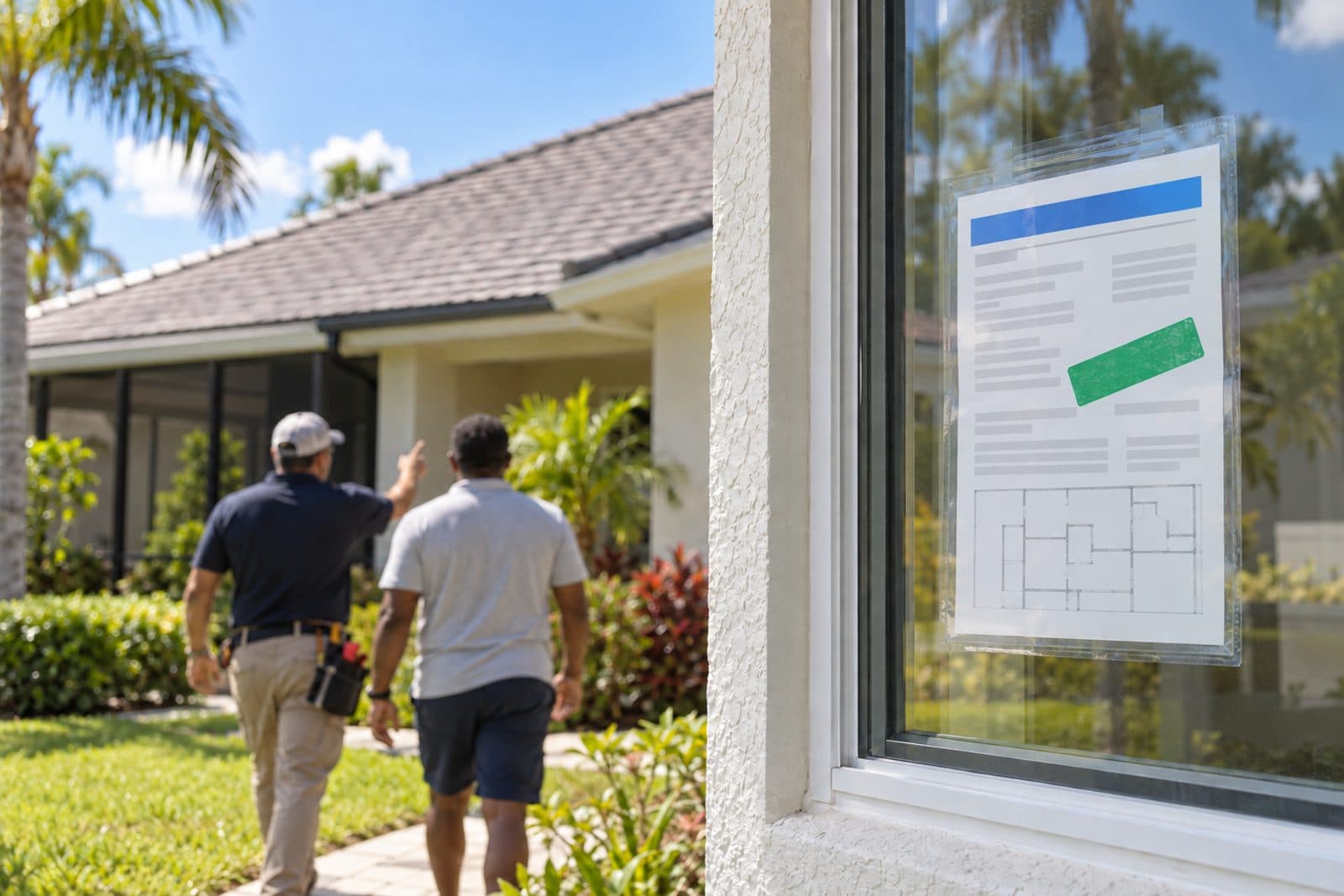
Miami is an incorporated municipality, so code enforcement here is normally run by the municipality itself, and the notice names the office handling your case. In Florida, code enforcement works under Chapter 162, Florida Statutes, which lets cities and counties use either a code enforcement board or a special magistrate. The process generally starts with a notice of violation giving the owner a reasonable time to correct the problem; if it is not corrected, the case is set for a hearing, and the board or magistrate issues an order with a compliance date. Fines can follow past that date, and a certified copy of an order imposing a fine can be recorded in the public records, where it becomes a lien on the property. Exact steps, deadlines and amounts vary, so confirm them with the office named on your notice.
While your case is open, don't
- Do not assume it closed itself. An open or expired permit stays on the property record until it is properly closed out, no matter how long ago the work was finished.
- Do not start more work first. The building department decides what each open permit needs before it can be closed, and new work on top of it can complicate the inspections that are still outstanding.
- Do not tear anything out yet. An inspector may need to see the existing work, so wait until the building department says what it requires rather than opening up or removing finished surfaces on a guess.
- Do not let the dates slip by unnoticed. Put the compliance date and any hearing date on your calendar and keep contact with the code office named on your notice while the work is being arranged.
What we do
- We pull the permit historyWe get the permit history for the property from the building department and sort out which permits are open, which expired, and which are already finalized.
- We identify what each one is missingEach open or expired permit is listed with the inspections it still needs. Some are one missing final. Others need more.
- We check the work against the approved plansWe compare what was actually built to what the plans and the permit covered, so there are no surprises at inspection.
- We schedule inspections and make correctionsWe schedule the missing inspections and carry out the corrections an inspector requires. Electrical, plumbing and air-conditioning work is done by our Florida-licensed subcontractors, who pull that trade's permit.
- We renew or re-apply under our licenceWhere a permit has expired or the original contractor is no longer around, we renew it or apply for a new permit under our Florida Certified Building Contractor licence CBC1267336, after-the-fact permits included.
- We work each permit through to closedWe follow each permit to the point it is closed out and give you the paperwork to show the code office named on your notice.
Work by 360 Home Improvements, Florida Certified Building Contractor CBC1267336. Electrical, plumbing and AC work goes to our Florida-licensed subcontractors, who pull that trade's permit.
How it works in Miami
Open permits are common on Miami homes for ordinary reasons. Storm repairs, roof and window replacements and a previous owner's renovation can all leave permits open on a Florida property. Hurricane season runs June 1 through November 30, and the repair work that follows a storm is often permitted in a hurry and then never finalized. Years later the record still shows it. Miami's housing stock is largely concrete block and stucco, much of it built between the 1940s and the 1970s, so many properties have passed through several owners and several rounds of work.
Miami-Dade sits inside the High-Velocity Hurricane Zone, where roofing, windows, doors, shutters and similar products need approval for that zone, usually a Miami-Dade Notice of Acceptance. That matters when an older open permit involves exterior components, because the inspection will look at what is actually installed. Salt air off Biscayne Bay and year-round humidity are hard on metal fasteners and hardware, so corrections found during an inspection in Miami often involve corroded parts. Downtown, Brickell and the bayfront are heavy with condominiums, and condo associations and gated communities are very common here, so exterior work often requires association approval alongside the permit.
Questions people ask
- Who closes an open permit in Miami?
- The building department with jurisdiction over the property decides what each open permit needs before it can be finalized. We do the work, schedule the inspections and submit the paperwork. Questions about your specific case go to the code office named on your notice.
- The contractor who pulled the permit is gone. What now?
- That happens often, especially with older permits on Miami properties. Where the original contractor is no longer around, we can apply for a new permit under our licence and work the job through the inspections. The building department confirms what it will accept.
- Will the inspector need to open up finished walls or ceilings?
- Sometimes. Work already done without a permit, or work that was never inspected, may require opening up finished surfaces so an inspector can see it. We check the work against the approved plans first and do only what the building department asks for.
- Does an open permit affect a sale or refinance?
- An open permit stays on the property record until it is finalized, and it often surfaces at a sale or a refinance. That is why many Miami owners find out about one long after the work was done. Confirm the status with the local building department.
- What does this cost?
- We give a free estimate and agree the price in writing before work starts. Cost depends on how many permits are open, how old they are, what inspections are missing, whether corrections are needed and whether the work involves HVHZ-approved products or a trade permit.
This page is general information about Florida code enforcement, not legal advice. For questions about your own case (deadlines, hearing dates, fines or liens), contact the code enforcement office named on your notice, or a Florida attorney.
Send us the notice
Call (954) 906-7864 or send a request through the form, and we will read the notice with you, look at the property and give you a free estimate with the price agreed in writing before any work starts. Questions about the case itself — deadlines, hearing dates, fines or liens — go to the code enforcement office named on your notice, and legal questions go to a Florida attorney.
Request a free estimate
Tell us what the notice says and where the property is. We'll look at what the violation needs and agree the price with you before any work starts.
Same violation in nearby cities
Other violations in Miami
- Roof citation
- Fence, wall or pool barrier citation
- A lien was recorded on my property
- Daily fines are adding up
- Work done without a permit
- Overgrown lot, yard or debris
Code Violation Solver is run by 360 Home Improvements, a licensed Florida contractor. We fix the condition behind the violation; the code office named on your notice decides the case.